Skip to content

Table of Contents
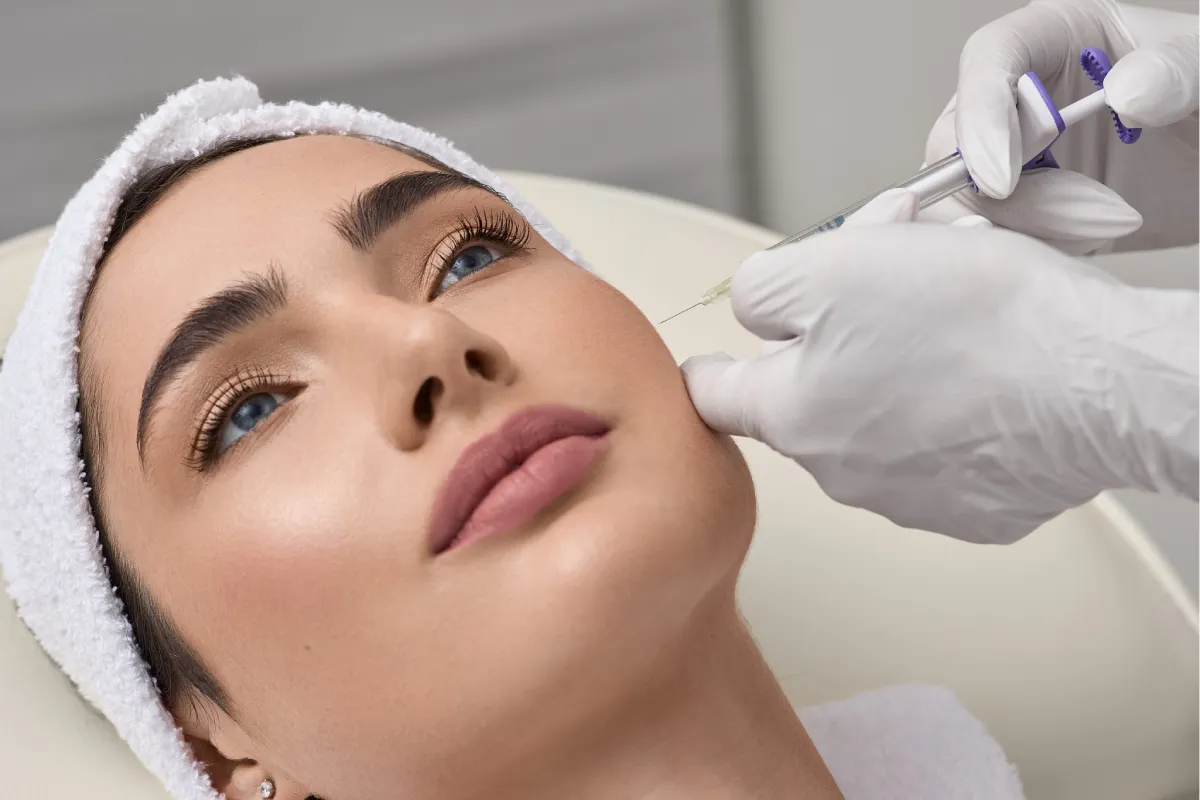
Facial volume loss does not always show up as deep wrinkles first. For many people, it starts as a subtle change in shape. The cheeks may look flatter in photos, the temples may appear more hollow, and shadows can make the face look tired even after a full night of rest. Dermal fillers can help address these changes by restoring soft volume in specific areas, creating a refreshed look without surgery or a dramatic change in facial expression.
Why Cheeks and Temples Lose Fullness Over Time
The face is supported by layers of bone, fat, muscle, and skin. As the years pass, these layers change. Bone structure may gradually shift, collagen production slows, and fat pads that once gave the cheeks and temples their soft contour can thin or move. The result is not always sagging alone. It may look more like flatness, hollowness, or sharper shadows.
The cheeks and temples are especially important because they influence the way the whole face is framed. Cheeks support the midface, while the temples help create a smooth transition between the forehead, eyes, and outer cheek area. When both areas lose volume, the face can appear narrower, more angular, or less rested.
How Dermal Fillers Restore Volume Without Surgery
The goal of filler treatment is not simply to “fill” every hollow area. A more thoughtful approach looks at where the face has lost support and how that affects balance. Fillers are placed in specific areas to replace or enhance volume where it is needed most.
Many commonly used fillers are made with hyaluronic acid, a substance that occurs naturally in the body and helps maintain hydration and softness in the skin. Depending on the product and placement, fillers can help soften creases, improve contour, and support areas that have started to look depleted.
For sunken cheeks, filler may be placed in the midface to bring back gentle structure. This can help the cheeks look smoother and more supported. For hollow temples, filler may help reduce the concave appearance that can make the upper face look tired or shadowed.
A well-planned treatment can restore lost facial volume naturally because it works with the patient’s existing features instead of changing them entirely. The most natural-looking outcomes usually come from conservative placement, careful product selection, and an understanding of how each area affects the next.
Why Sunken Cheeks Can Change the Whole Face
Cheek volume does more than create roundness. It helps support the central part of the face. When the cheeks lose fullness, the lower face may look heavier, smile lines may seem more noticeable, and the skin can appear less smooth around the midface.
This is why cheek filler is often used to restore structure rather than simply add size. Small, precise amounts can help improve the way light reflects across the face. Instead of seeing sharp hollows or flatness, the face may look softer and more rested.
Why Temple Hollowing Is Often Overlooked
Temple volume loss can be easy to miss because it does not always create a line or wrinkle. Instead, it creates a hollow area near the sides of the forehead. This hollowing can make the eyes look more tired, the brow area less supported, and the face more drawn from the side.
Temple filler may help Reduce Hollow or Tired Appearance by softening shadows in the upper face. This can create a smoother transition from the forehead to the cheek area. The improvement may be subtle, but it can make the face appear more balanced.
The temples require advanced anatomical knowledge because this area contains important vessels and delicate structures. For that reason, treatment should be performed by a trained injector who understands the correct depth, product choice, and safety considerations for the area.
Non-Surgical Rejuvenation for Cheeks and Temples
For patients who are not ready for surgery or do not need a surgical procedure, fillers can be a practical option. Non-Surgical Rejuvenation for Cheeks and Temples focuses on restoring volume, contour, and proportion through injections rather than incisions.
This approach may be helpful for patients with mild to moderate volume loss, naturally hollow temples, sunken cheeks, or early facial aging. It may also be used as part of a broader treatment plan that includes skincare, wrinkle relaxers, or skin treatments.
Achieving Facial Balance, Not a Different Face
A good filler result should not make someone look unfamiliar. The goal is usually to achieve a more youthful facial balance by restoring what has changed over time or enhancing areas that have always lacked support.
Facial balance means the cheeks, temples, jawline, lips, and chin work together visually. If one area is treated without considering the rest of the face, the result may look uneven or disconnected. This is especially true with cheeks and temples because they influence the upper and middle portions of the face.
Improve Facial Symmetry and Midface Harmony
Most faces are naturally asymmetrical. One cheek may sit slightly higher, one temple may look more hollow, or one side of the face may hold volume differently. Fillers may help Improve Facial Symmetry and Midface Harmony by adjusting small areas of imbalance.
This does not mean making both sides perfectly identical. Perfect symmetry can look unnatural because human faces are not built that way. Instead, the goal is to reduce distractions and create a smoother visual flow between features.
What to Expect During Treatment
A dermal filler appointment is usually simple and structured, with each step focused on comfort, precision, and natural-looking placement.
- Consultation and Facial Assessment
Your provider reviews your concerns, facial structure, medical history, and goals.
- Personalized Treatment Planning
The treatment plan is designed around your cheeks, temples, facial symmetry, and natural contours.
- Skin Cleansing and Preparation
The treatment areas are cleaned and may be marked for accurate filler placement.
- Comfort Measure
A topical numbing agent or lidocaine-containing filler may be used to improve comfort.
- Precise Filler Placement
Filler is injected in small, controlled amounts to restore volume where support is needed.
- Post–Treatment Review
Your provider checks the treated areas and explains that mild swelling may affect the initial look.
- Aftercare Instructions
You will receive guidance on what to avoid while the treated areas begin to settle.
Skincredible Face Fillers in Bryn Mawr, PA
Skincredible offers face fillers in Bryn Mawr, PA, for patients who want a personalized approach to facial volume loss, contour refinement, and wrinkle softening. Our team uses filler options such as JUVÉDERM®, Restylane®, RHA® Collection, and Belotero Balance®. These hyaluronic acid fillers can be selected based on the area being treated, the amount of support needed, and the desired finish.
At Skincredible, the focus is on customized treatment planning rather than a one-product approach. Some patients may need structure in the cheeks, while others may need soft correction in the temples or delicate smoothing around the mouth. The consultation helps determine what is appropriate, what is realistic, and how to keep the result balanced.
Frequently Asked Questions
Can dermal fillers help sunken cheeks and hollow temples?
Yes, dermal fillers can help restore soft volume in the cheeks and temples to create a more balanced, refreshed appearance.
How do fillers reduce a hollow or tired appearance?
Fillers add volume beneath the skin in targeted areas, helping soften shadows that can make the face look drawn or tired.
Are cheek and temple fillers a surgical treatment?
No, cheek and temple fillers are non-surgical interventions performed with precise injections.
How long do face fillers usually last?
Results vary by filler type, treatment area, metabolism, and lifestyle, but many patients maintain results for several months or longer.